
.png)


The Real Difference Between 2D and 360° Showcases for Architecture Firms



Your portfolio is full of award-worthy projects. The design is sophisticated. The spatial sequences are considered and deliberate. The materiality is exquisite. You have spent years refining a body of work that genuinely deserves to win the commissions you are pitching for.
And yet you keep losing pitches to firms whose work is not better. Just better presented.
The client sits across the table, looks at your beautifully produced photography, nods politely, and chooses someone else. Not because your architecture failed to impress them. But because they never actually experienced it. They saw images of buildings. They did not feel what it is like to move through them.
That gap, between what your work is and what a client can perceive from a static portfolio, is not a design problem. It is a communication problem. And it is one that 360° immersive showcases are uniquely positioned to solve.
Why Architecture Is the Hardest Discipline to Present in 2D
Every creative discipline faces the challenge of representing work in a portfolio. But architecture faces a version of this challenge that is categorically more difficult than almost any other field.
Architecture is not primarily a visual medium. It is a spatial, experiential, and temporal one. The qualities that make a building genuinely exceptional, the way spaces connect and flow, the relationship between interior and exterior, the movement of light across surfaces throughout the day, the sense of scale and proportion that only becomes apparent at human eye level, none of these things can be captured in a photograph.
A photograph is a single moment, from a single angle, under a single set of lighting conditions, composed by a photographer to present the space in its most flattering possible light. It is, by definition, a curated and partial representation of something that exists in four dimensions. And the qualities it captures best, aesthetic beauty, compositional elegance, material richness, are precisely the qualities that are easiest for competitors to replicate in their own photography.
The qualities that actually differentiate exceptional architecture from competent architecture, the spatial intelligence, the experiential sequence, the way a building makes you feel as you move through it, are the qualities that 2D photography is least equipped to convey.
The result is a profound and persistent irony at the heart of architectural practice: the most important aspects of your work are the least visible in the medium you use to present it.
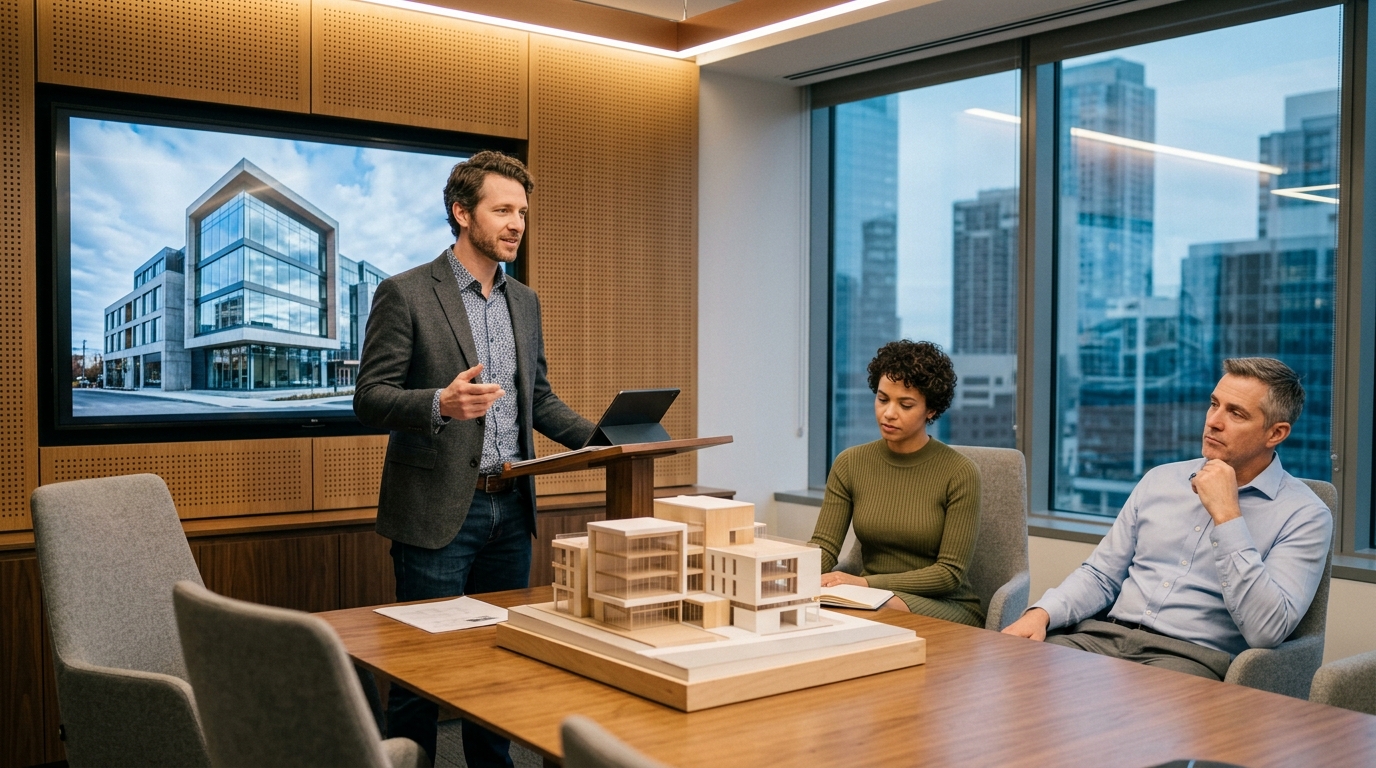
What 2D Photography Shows & What It Misses
To understand why this matters commercially, it helps to be precise about what static photography can and cannot communicate.
What 2D Photography Shows Well
Aesthetic quality and material richness. The beauty of a well-resolved facade, the warmth of a carefully selected timber, the precision of a detailed junction. These things photograph beautifully, and a skilled architectural photographer can produce images that genuinely do justice to the visual quality of a project.
Compositional moments. The view from a specific point in the building that the architect intended as a key experiential moment. The relationship between a window and the landscape beyond it. The play of light on a surface at a particular time of day.
Individual spaces in isolation. A living room, a reception hall, a courtyard, each presented as a self-contained composition.
What 2D Photography Cannot Show
Spatial sequence and flow. How you move from the entrance to the main living space, how the compression of a corridor gives way to the release of a double-height room, how the building unfolds as you inhabit it. These are the qualities that define the experience of a building, and they are entirely invisible in a static image.
Scale and proportion. Photography consistently distorts scale. Wide-angle lenses make spaces appear larger than they are. Telephoto compression flattens depth. The genuine sense of scale that makes a well-proportioned space feel right at human eye level cannot be conveyed in a photograph.
Spatial relationships. How the kitchen connects to the garden. How the upper floor relates to the double-height space below. How the building sits in its landscape. These relationships are the substance of architectural thinking, and they require movement and sequence to be understood.
Atmosphere across time. A building at dawn is a different experience from the same building at dusk. The quality of light in a north-facing studio in winter is different from the same space in summer. Static photography captures one moment. Architecture is experienced across many.
Design intent. The thinking behind the decisions, why the staircase is positioned where it is, why the ceiling height changes at that point, why the view is framed in that particular way, is invisible in a photograph. Clients who cannot perceive the intent cannot value the intelligence behind it.
Why This Costs You Pitches
When clients cannot perceive the spatial and experiential qualities that differentiate your work, they default to the criteria they can evaluate. Price. Relationship. Perceived risk. Track record in their specific sector.
These are not unreasonable criteria. But they are not the criteria on which exceptional architecture should be judged, and they are not the criteria on which you want to compete. When the conversation becomes about fee levels and risk mitigation rather than spatial intelligence and design excellence, you are competing on ground that favours larger, more established firms with longer track records and lower perceived risk profiles.
The firms winning pitches consistently are not always the ones with the best architecture. They are the ones whose presentations help clients understand their work most clearly and quickly. Clarity builds confidence. Confidence drives decisions. And immersive experience builds clarity in a way that no static portfolio can match.
For international clients, the problem is compounded further. A domestic client can visit your completed projects. An international client shortlisting firms for a significant commission cannot easily justify a trip to experience your work in person before making a decision. Without an immersive alternative, you are asking them to make a high-stakes commitment based on photographs and a presentation. Most will not take that risk, and they will choose a local firm instead, not because the local firm is better, but because the decision feels safer.
The 360° Difference: From Viewing to Experiencing
The shift that 360° immersive showcases make possible is not incremental. It is categorical.
A 2D portfolio says: "Here is what our project looks like from the angles we have chosen to show you."
A 360° showcase says: "Explore our project yourself. Move through the space. Experience the design at your own pace, from your own perspective."
That difference changes everything about how a client relates to your work.
Spatial Sequence & Flow Become Tangible
A client exploring a 360° showcase of your project can walk the sequence you designed. They can feel the compression and release, the transition between spaces, the way the building unfolds. The design intelligence that is invisible in a photograph becomes immediately apparent when experienced in motion.
Scale & Proportion Are Preserved.
360° capture maintains the genuine sense of scale that photography distorts. A client exploring your project in 360° understands how the spaces actually feel at human eye level, not how a wide-angle lens has chosen to represent them.
Spatial Relationships Become Clear
The connections between spaces, the relationship between interior and exterior, the way the building sits in its context, all of these become navigable and understandable in a way that no sequence of static images can achieve.
Design intent becomes discoverable.
When clients can move through a space and explore it at their own pace, they begin to notice the decisions you made and understand why you made them. The positioning of a window, the change in ceiling height, the material transition at a threshold, these things reveal themselves through experience in a way they never can through observation.
International clients can experience your work without travelling. A 360° showcase of your completed projects gives international clients the ability to evaluate your spatial intelligence from anywhere in the world, removing the geographical barrier that has historically limited your ability to compete for international commissions.
The Commercial Case: What Changes When Clients Can Experience Your Work
The impact of immersive showcases on architectural practice is measurable across several dimensions.
Pitch win rates improve significantly when clients can experience spatial quality rather than observe it. Firms using 360° portfolio showcases in competitive pitches report win rate improvements of 30 to 50%, with clients consistently citing a clearer understanding of the firm's design approach as the deciding factor.
International enquiries increase when your portfolio is accessible remotely. Architecture firms with immersive online portfolios report 40 to 60% increases in international enquiries, with a significantly higher proportion of those enquiries converting to serious conversations.
Fee conversations shift when clients understand the value of what they are commissioning. When a client has experienced the spatial quality of your completed work, the conversation about fees is grounded in a genuine understanding of what they are paying for. The result is less fee pressure and a higher proportion of clients who choose you on the basis of design excellence rather than price.
The Bottom Line: You Cannot Communicate Spatial Design in 2D
The firms winning the most significant commissions in 2025 are not the ones with the largest photography budgets. They are the ones making it effortless for clients to understand their spatial intelligence, to experience the quality of their work before committing to a relationship, and to feel confident in their decision from anywhere in the world.
360° immersive showcases do not replace the quality of your architecture. They make it visible. They give clients the experience they need to understand what you do, value what you offer, and choose you with confidence.
Your work deserves to be experienced, not just observed. The medium you use to present it should be equal to the work itself.
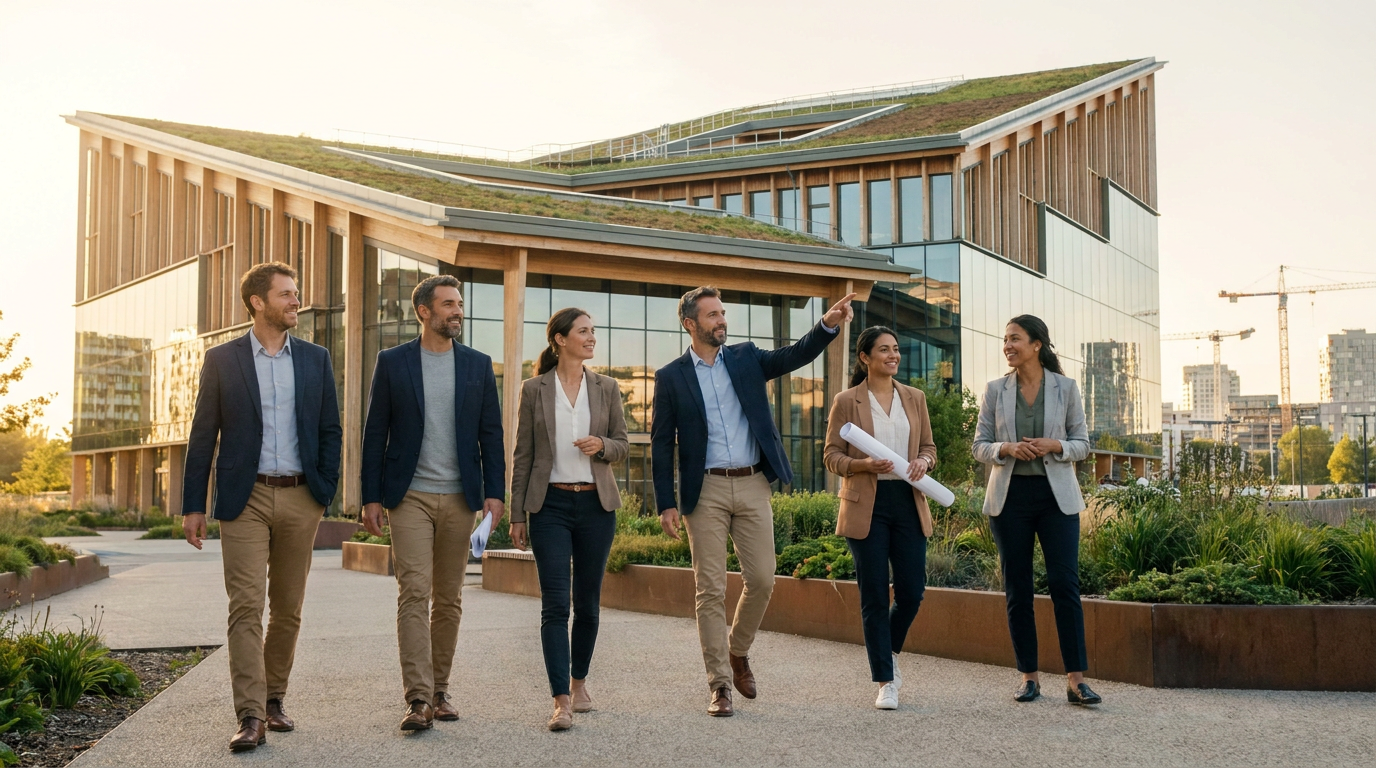
The Fundamental Problem: Architecture Isn't Visual
Architecture is spatial, experiential, and temporal. Photography captures moments, but not how a space feels to move through, its true scale, or the relationships between rooms, levels, and thresholds. No photograph, no matter how beautifully composed, can communicate these things. Yet these are precisely the qualities that justify premium fees and win competitive pitches.
In other words, the most important parts of an architect's work are the leastvisible in a static portfolio. The medium strips away the very experience it's trying to sell.
What 2D Photography Shows & What It Misses
Professional photography excels at capturing aesthetic beauty, compositional elegance, and individual spaces frozen in a single, carefully chosen moment. It is a powerful tool, but a limited one.
What it cannot convey is everything that makes great architecture great: the spatial relationships between rooms, the sense of scale and proportion as you move through a building, the flow from one sequence to the next, the atmosphere created by light and material, and the broader context of how a structure sits within its environment. The irony is sharp - the qualities that 2D captures best are the ones competitors can replicate.
Why This Costs You Pitches
When a client reviews two portfolios side by side and both look like beautiful photographs of beautiful buildings, the decision rarely comes down to design quality. Instead, it defaults to price, existing relationships, or which ever firm feels like the "safer" choice. For international clients whoc an't visit a completed project in person, the problem is even more acute,they'll often choose a local firm simply because proximity feels less risky.
Losing a pitch doesn't always mean the other firm was better. More often, it means their presentation helped the client understand their work faster. Clarity wins. And experience builds clarity.
The 360°Difference: From Viewing to Experiencing
A traditional portfolio says, "Here's what our project looks like from selected angles." An immersive 360° tour says, "Explore our project yourself. Move through the space. Experience the design."The difference between these two approaches isn't incremental, it's categorical. One asks the client to trust the architect's curated perspective.The other invites them to form their own understanding, which builds far deeper confidence and connection.
How 360°Tours Communicate Spatial Design
Immersive tours allow clients to walk the spatial sequence of a project and feel the design as it was intended to be experienced. Scale and proportion, qualities that are inevitably flattened in photography, are preserved in 360°, giving viewers an honest sense of volume and presence. The connections between spaces become immediately clear, revealing the relationships that define great architecture but are impossible to communicate in a single frame. Light and atmosphere can be captured across multiple times of day, showing how a building breathes and changes. Most importantly, clients discover the architect's thinking first hand, not through explanation, but through direct experience.
The Bottom Line: Architecture Is Experiential
Spatial design cannot be fully communicated in two dimensions. 360° virtual tours let clients experience a firm's work on their own terms, driving understanding, building confidence, and ultimately increasing conversion rates. The firms winning pitches in 2025 aren't those with the biggest photography budgets.They're the ones making it effortless for clients to understand their spatial intelligence.
Ready to Show Clients What Makes Your Architecture Special?
At Revol Studios, we create immersive 360° virtual showcases that communicate spatial design, win competitive pitches, and open your practice to international clients who cannot visit your projects in person.
Our architecture clients are currently:
- Improving pitch win rates by 30 to 50% by giving clients a genuine experience of their spatial work
- Increasing international enquiries by 40 to 60% through remotely accessible immersive portfolios
- Reducing fee pressure by helping clients understand the value of spatial intelligence before the conversation begins
- Winning commissions on design excellence rather than competing on price, relationship, or perceived risk
Your portfolio is full of work that deserves to win. Give it the medium it needs to be understood.
Click here to book a demo and discover how Revol Studios can transform your portfolio into an immersive experience that wins pitches.
More Blogs



Let’s Build Something
.jpg)
Tell us your goals, and we’ll help you design the perfect creative solution.