
.png)


Stop Wasting Time on Tyre-Kickers: How Virtual Tours Pre-Qualify Your Leads




Last week, two site tours ended with couples who just wanted to "have a look." Yesterday, three hours disappeared into a prospect who went silent the moment you followed up. The week before that, a full morning was lost to a comparison shopper who ultimately chose a competitor on price alone.
The pattern is familiar. And it is expensive. The truth is, 60–70% of the enquiries filling your diary are not actually leads. They are browsers, tyre-kickers, and comparison shoppers, consuming your team's time, energy, and attention without any real intention to commit. And every hour spent on them is an hour not spent on the 30–40% who are genuinely ready to buy.
That is not just inefficiency. It is a quiet, compounding profit drain. When your calendar fills with low-intent enquiries, your best prospects receive less attention, follow-up slows, and your team burns out chasing conversations that were never going to close. The solution is not more leads. It is better qualification, and it starts before anyone ever speaks to you.
The Hidden Cost of Unqualified Leads
Most businesses track their conversion rate. Very few track the cost of the enquiries that never convert.
Let's put some numbers to it (figures in GBP £ and USD $ equivalents):
A typical week for a sales or lettings team:
- 8–12 site tours or viewings per week
- 60–70% do not convert, that is 5–8 wasted appointments
- Each appointment costs approximately 2–3 hours of staff time (travel, preparation, the viewing itself, follow-up)
- That is 10–24 hours per week lost to low-intent prospects
Annualised opportunity cost:
- At a conservative internal rate of £75 GBP / $95 USD per hour
- 10–24 hours per week × 48 working weeks = 480–1,152 hours per year
- Opportunity cost: £36,000 GBP–£86,400 GBP ($46,000 USD–$110,000 USD) per year
And that figure does not account for the downstream cost: the qualified buyers who received a slower response because your team was exhausted, the deals that stalled because follow-up was delayed, or the revenue lost because your best salespeople were tied up in viewings that were never going to close.
Unqualified leads are not a minor inconvenience. They are one of the most significant and least visible drains on your business's profitability.
Not All Enquiries Are Created Equal
Understanding the difference between your lead types is the first step to protecting your time and maximising your conversion rate. Most enquiry pipelines contain three distinct groups, and knowing which is which changes everything.
Group One: The Browsers (40–50% of all enquiries)
Browsers are curious, casually looking, and often have no real intention to commit. They will book a viewing, ask a few surface-level questions, and then disappear without a trace. They are not bad people, they are simply not ready. But they cost you time, energy, and diary space, with almost nothing to show for it. In a busy week, browsers can consume the majority of your team's available hours.
Group Two: The Comparison Shoppers (30–40% of all enquiries)
Comparison shoppers are more engaged, but their primary motivation is price. They will visit every comparable option in the market, line them up side by side, and more often than not, default to the cheapest. You can spend hours tailoring a pitch, preparing a proposal, and conducting a full site tour, only to lose the deal on a margin of a few thousand pounds. These prospects are not disloyal; they simply have not yet found a reason to choose you over the competition on anything other than cost.
Group Three: The Qualified Buyers (20–30% of all enquiries)
These are the prospects who deserve the lion's share of your attention. Qualified buyers have clear intent, a defined budget, and are ready to move. They convert at a rate of 60–80%, compared to the 5–15% conversion rate of browsers and comparison shoppers. They ask specific questions, they engage meaningfully, and they are looking for confidence, not just information.
The goal is straightforward: spend 80% of your time on the 20–30% who are genuinely ready to buy. The challenge is identifying them before they consume your calendar.
Why Traditional Qualification Fails
The conventional approach to lead qualification relies on a discovery call or an initial meeting to separate serious prospects from casual enquirers. The problem is that this still requires your time, and by the time you have identified a browser, you have already invested an hour you will never recover.
Qualification forms and pre-screening questionnaires help, but they are easy to game. A browser who is genuinely curious will fill in any form you put in front of them. A comparison shopper will answer every question correctly and still walk away for a cheaper alternative.
The most effective qualification tool is not a form or a phone call. It is the experience itself.
When a prospect has to invest their own time and attention to explore your space, virtually walking through it, examining the details, understanding the layout and the quality, they self-select. The browsers move on quickly. The comparison shoppers narrow their shortlist. And the qualified buyers arrive at your door having already made a significant portion of their decision.

How Virtual Tours Change the Qualification Equation
This is where 360° immersive virtual showcases fundamentally shift the dynamic in your favour, and why the businesses using them are reporting dramatic improvements in both lead quality and conversion rates.
Browsers self-eliminate.
A browser who would normally take up your morning with a pointless viewing will now explore the space online and quietly move on, without ever entering your diary. They get the experience they were looking for. You get your time back. No awkward follow-up, no wasted journey, no opportunity cost.
Comparison shoppers arrive pre-narrowed.
Instead of dragging you into a five-way race to the bottom, comparison shoppers can narrow their shortlist virtually. By the time they contact you, they have already spent meaningful time inside your space. They have seen the quality of the finishes, understood the layout, and compared it against alternatives, all before picking up the phone. That means the conversation starts at a different level. They are not asking "what does it look like?" They are asking "when can we talk terms?"
Qualified Buyers Arrive Ready to Move
The most valuable shift is what happens to your best prospects. Qualified buyers arrive having already "walked" the property or venue multiple times. Their questions are specific, their intent is clear, and they are ready to discuss details, not logistics. The viewing becomes a confirmation, not a discovery. And confirmation viewings close at a dramatically higher rate than exploratory ones.
The result is a calendar that fills with high-intent, pre-qualified leads, freeing your team to focus on the conversations that actually convert.
The Numbers Behind the Shift
The impact of virtual tour pre-qualification is not theoretical. The broader data on immersive technology and lead quality tells a consistent story.
- According to research cited by the National Association of Realtors (NAR), properties with virtual tours receive 87% more views than those without, but crucially, the enquiries generated are of measurably higher quality, because prospects have already self-selected through the experience.
- A study by Matterport found that listings featuring immersive 3D tours generated 49% more qualified leads compared to standard photo listings, with a corresponding reduction in low-intent viewings.
- Research from the hospitality and events sector mirrors this pattern: venues and properties using interactive virtual showcases report a 40–60% reduction in unqualified site visits, with conversion rates on remaining viewings improving by 25–35% as a result.
- For a business conducting 8–12 viewings per week, a 50% reduction in unqualified appointments represents:
- 200–300 hours recovered per year
- £15,000 GBP–£22,500 GBP ($19,000 USD–$28,500 USD) in recovered opportunity cost
- A sales team that is less burned out, more focused, and closing at a higher rate
That is not a marginal improvement. That is a structural change in how your business operates.

Qualification Is a Profit Centre
There is a mindset shift that separates the businesses growing efficiently from those stuck on the hamster wheel of endless viewings and low conversion rates.
Most businesses treat lead generation as the primary lever. More enquiries, more opportunities, more chances to close. But when 60–70% of those enquiries are low-intent, more leads simply means more wasted time. The real lever is qualification, and the businesses that get this right are not just saving hours. They are compounding those hours into higher revenue, better client relationships, and a team that has the energy to perform at its best.
Virtual tours are not a marketing tool. They are a qualification infrastructure. They work around the clock, pre-screening every prospect who encounters your brand, filtering out the browsers, warming up the comparison shoppers, and delivering qualified buyers to your door with their decision already half-made.
In 2025, the businesses thriving are not the ones with the most leads. They are the ones who qualify ruthlessly, protect their time fiercely, and focus their energy on the prospects who are genuinely ready to buy.


Ready to Stop Wasting Time on Browsers and Focus on Buyers?
Every hour your team spends on a low-intent viewing is an hour not spent closing a deal that was already within reach.
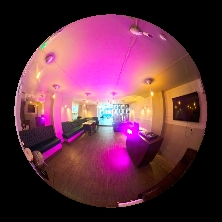
At Revol Studios, we create immersive 360° virtual showcases that do the qualification work before your team ever picks up the phone.
The question is not whether you can afford to invest in immersive technology. The question is how much longer you can afford to fill your calendar with conversations that were never going to close.
Click here to book a demo and see how a Revol Showcase can transform your lead quality, and your team′s time.
More Blogs



Let’s Build Something
.jpg)
Tell us your goals, and we’ll help you design the perfect creative solution.