






Hotels Vs OTAs: Winning Back Direct Bookings with Interactive Virtual Showcases



You've invested everything into your property. The architecture is striking, the interior design is curated, and the service is impeccable. Your guests love you—the consistent stream of five-star reviews across TripAdvisor and Google proves that you are delivering a world-class experience.
So why, despite all this excellence, are 70–80% of your bookings still funneling through Online Travel Agencies (OTAs) like Booking.com, Expedia, and Airbnb?
Every reservation made through an OTA costs you between 15% and 25% in commission. For many boutique hotels and serviced apartment operators, that represents £15,000 GBP to £50,000+ GBP ($19,000 USD to $64,000+ USD) per year—sometimes significantly more—disappearing into the pockets of platforms that add zero value once the guest actually arrives at your front door.
You know you should be driving more direct bookings. You've likely already taken the standard steps: your website is professional, you've invested in SEO, and you might even be running Google Ads to capture "brand name" searches. But when guests land on your site to compare options, they often default back to the OTAs. You're stuck paying a "tax" on bookings that should have been yours from the start.
The hard truth is this: it's not a traffic problem. It's a confidence problem.
Guests land on your site, they like what they see, but they still hesitate. They hesitate because they can't truly experience what they're buying through static imagery alone. OTAs fill that gap with a sense of familiarity, perceived safety, and standardized review systems. To win the booking, your website needs to do more than just show pictures; it needs to bridge the "Confidence Gap" by providing an immersive experience that proves your value before they even pack a suitcase.
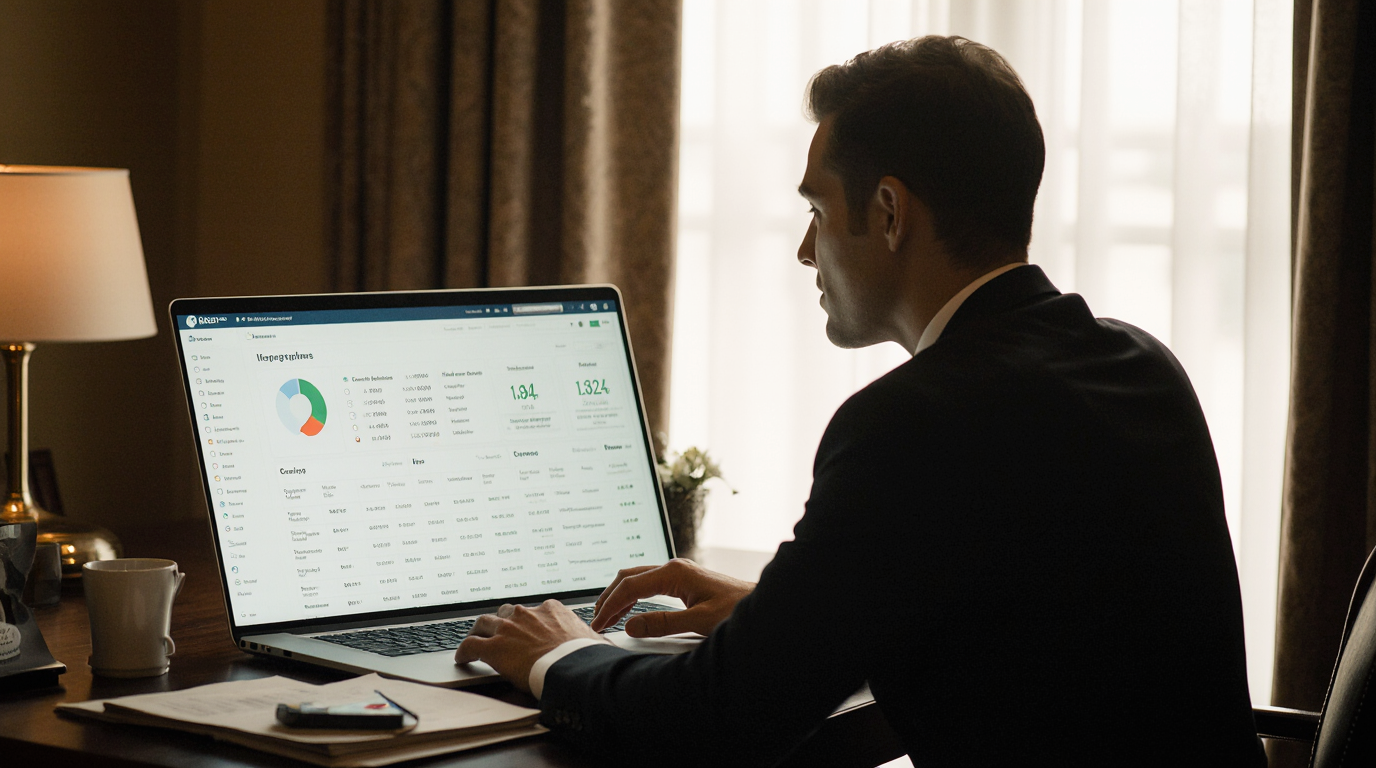
The £50K GBP ($64K USD) Commission Problem: The Hidden Leak in Your Bottom Line
Before we look at the solution, we must be brutally honest about what OTA dependence is actually costing your business. Many operators view commission as a "marketing expense," but when you look at the annual cumulative loss, it becomes clear that this is a massive leak in your profitability.
Let's look at two common scenarios (figures in GBP £ and USD $ equivalents):
Scenario A: The Boutique Hotel (20 Rooms, £150 GBP / $190 USD ADR)
- Annual Revenue: £1,095,000 GBP ($1.4M USD) (based on 75% occupancy)
- OTA Dependency: 75% of bookings come through third-party platforms
- Average Commission: 18%
- Annual Commission Paid: £147,825 GBP ($188,000 USD)
Scenario B: Luxury Serviced Apartments (40 Units, £180 GBP / $230 USD ADR)
- Annual Revenue: £2,628,000 GBP ($3.3M USD) (based on 75% occupancy)
- OTA Dependency: 70% of bookings come through third-party platforms
- Average Commission: 20%
- Annual Commission Paid: £367,920 GBP ($470,000 USD)
That is not just "the cost of doing business." That is pure profit you are handing over to a middleman. Imagine what that capital could do if it stayed within your business — funding a full property renovation, doubling your internal marketing budget, or significantly improving staff retention.
When you rely on OTAs, you aren't just losing money; you're losing the direct relationship with your guest. You don't own their data, you can't easily upsell them before arrival, and you are at the mercy of the OTA's algorithm.
A Global Perspective: Why the "Confidence Gap" is Universal
Whether you are managing a heritage hotel in London, a luxury villa in Bali, or a corporate apartment in New York, the guest's psychological journey is the same. They are looking for reasons to trust you.
In international travel, the "Confidence Gap" is even wider. A guest booking from 5,000 miles away cannot "pop in" to see the property. They are entirely dependent on your digital presence. If your website only offers static, 2D images, you are forcing that international guest to rely on the "safety" of an OTA. By providing an interactive 360° showcase, you provide the ultimate "digital handshake," giving global travelers the certainty they need to book direct from anywhere in the world.
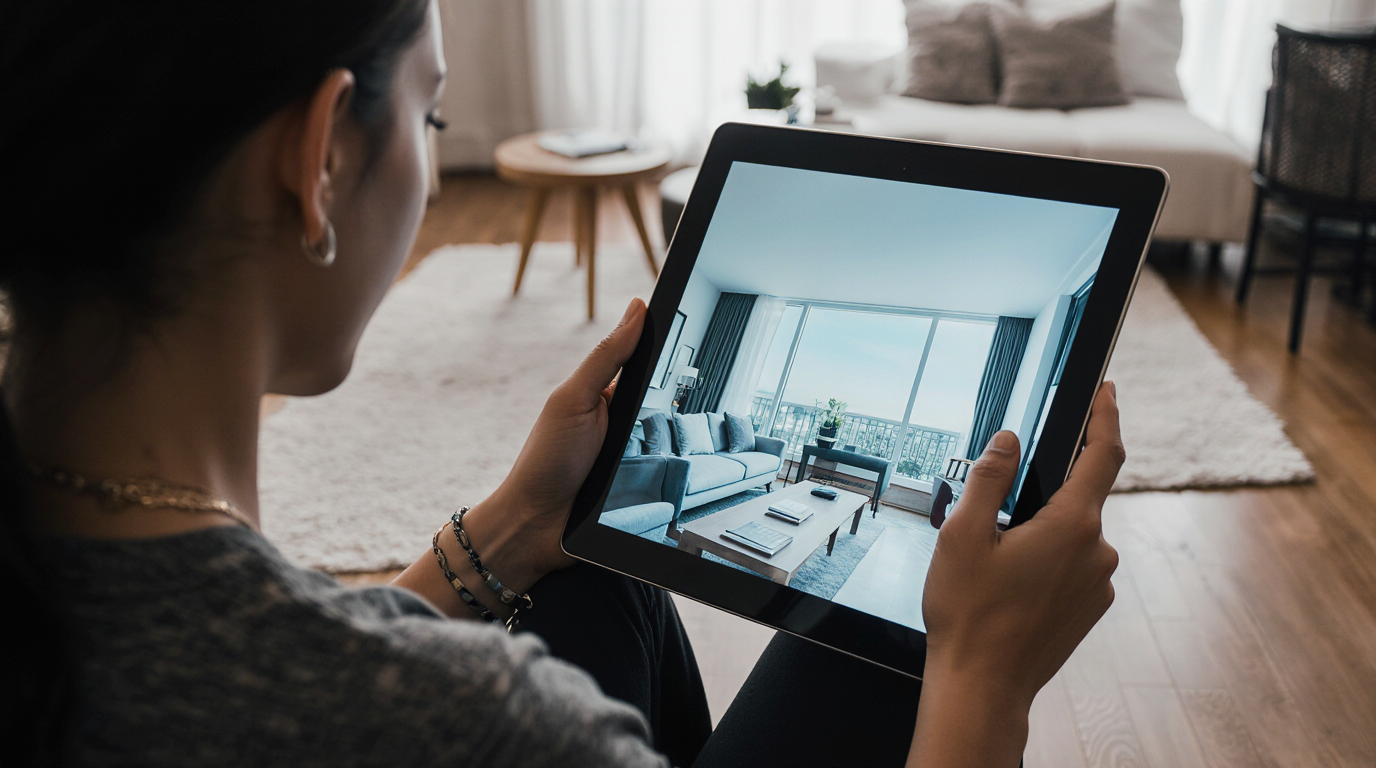
Why Guests Book on OTAs (Even When They Find You First)
It is a well-documented phenomenon in the travel industry known as the "Billboard Effect." According to a study by Expedia, four out of five online bookers visit an OTA at some point before booking — even if they ultimately book elsewhere. Guests discover a hotel on an OTA, visit the hotel's own website to do deeper research, and then return to the OTA to finalize the booking.
According to the h2c Hotel Direct Booking Study, 36% of hotel room bookings were made via an OTA in 2023, versus just 21% directly via a hotel's own booking engine. Despite years of "book direct" campaigns, the gap remains stubbornly wide.
Why does this happen? Why do guests leave your site — the very place where you have total control over the narrative — to book on a platform where you are just one of a thousand listings?
1. The "Catfishing" Fear
In the age of "Instagram vs. Reality," travelers are cynical. They know that professional hotel photography is designed to hide flaws. A wide-angle lens can make a cramped room look like a suite; clever lighting can mask a lack of natural sun. Guests fear that the "curated" version of your property on your website isn't the "real" version. OTAs feel "safer" because they provide a standardized layout and a wall of user-generated photos that guests trust more than your professional gallery.
2. The Information Gap
Static photos are snapshots in time. They don't tell the guest how the room flows. Is the bathroom actually adjacent to the bedroom? How close is the balcony to the noisy street? Does the "sea view" require leaning out of a window at a 45-degree angle? When a guest has an unanswered question, they feel a micro-moment of friction. Friction leads to hesitation. Hesitation leads them back to the "safety" of the OTA.
3. Social Proof and Familiarity
OTAs have spent billions optimizing their platforms to trigger "trust signals." In 2023 alone, Expedia Group and Booking Holdings each spent approximately US$6.8–6.9 billion on marketing — a budget no independent hotel can match. From "Only 2 rooms left!" to "Booked 15 times in the last 24 hours," they use psychological triggers to force a decision. Research shows that 70% of travelers would book via an OTA instead of directly on a hotel website if the price was the same, citing security, convenience, and credible reviews as the primary reasons.
The Real Problem: The Confidence Gap
The reason guests book on OTAs isn't usually about price. It's about confidence.
Confidence is the currency of the digital booking journey. If a guest feels 100% certain that the room they see on their screen is exactly what they will walk into, they will book. If they feel even 5% uncertainty, they will look for external validation — reviews, OTA photos, and the perceived "safety net" of a major platform.
Static photos and curated testimonials simply cannot compete with the immersive, review-rich world of the OTAs. To win, you need a tool that the OTAs cannot replicate: Total Transparency.
How Interactive Virtual Showcases Drive Direct Bookings
This is where the traditional "virtual tour" has evolved into something far more powerful: the Interactive Virtual Showcase.
Unlike the clunky, low-resolution 360° photos of a decade ago, modern immersive technology allows you to embed your entire sales funnel inside a high-definition digital twin of your property. Here is how it systematically dismantles the reasons guests book on OTAs:
1. It Eliminates "Room Anxiety"
When a guest can virtually walk from the front door, through the lobby, into the elevator, and straight into their specific room type, the "Catfishing" fear evaporates. They can see the ceiling height, the quality of the finishes, and the exact layout. This level of transparency builds an immediate bond of trust that a static gallery can never achieve.
2. It Answers Questions Silently
Instead of the guest having to call your reception or hunt through an FAQ page, they can simply "walk" over and see it. By embedding interactive hotspots within the tour, you can provide text, video, or image overlays that explain features in real-time.
- Example: A guest hovers over the bed and a window pops up: "Hypnos Super King Mattress with 400-thread count Egyptian cotton."
3. It Creates an Emotional Connection
Booking a holiday is an emotional act. We visualize ourselves in the space. An interactive showcase allows the guest to "inhabit" the room before they arrive — seeing the view from the window, imagining themselves in the armchair, feeling the flow of the space. This "spatial presence" triggers a much stronger psychological desire to book than a flat image ever could.
4. The "Book Now" Integration
The most powerful feature of a Revol Studios showcase is the ability to integrate your booking engine directly into the 3D environment. As the guest is standing (virtually) in the Penthouse Suite at peak emotional engagement, a "Book This Room" button appears. They click it and are taken directly to your checkout page — no OTAs, no distractions, no commission.
The SEO and Engagement Bonus
Beyond the direct booking benefits, interactive showcases are an SEO powerhouse. Google's algorithms prioritize "dwell time" — the amount of time a user spends on your website.
The average user spends less than 60 seconds on a standard hotel website. However, data shows that users spend 3x to 5x longer on sites with interactive 3D content. This high engagement signals to Google that your site is valuable, boosting your organic search rankings. Furthermore, these showcases can be integrated directly into your Google Business Profile, allowing guests to "See Inside" directly from Google Maps — capturing them even earlier in the search journey.
What the Industry Data Tells Us
Rather than relying on a single case study, the broader industry data paints a compelling picture of what is at stake — and what is possible.
According to Skift Research's Hotel Distribution Outlook 2024, direct digital channels are projected to overtake OTAs as the dominant booking channel by 2030, generating over $400 billion USD in hotel gross bookings compared to $333 billion USD from OTAs. The shift is already underway — but only for hotels that are actively investing in their direct booking infrastructure.
The data also confirms the scale of the financial opportunity:
- OTAs currently hold approximately 55% of the online hotel booking market, with commissions of 15–25% on every reservation (Prostay, 2025)
- 70% of travelers say they would book via an OTA over a hotel's own website even at the same price — citing trust and familiarity as the deciding factors (Cendyn / h2c, 2025)
- Hotels using AI and immersive technology for customer engagement report up to a 25% increase in direct bookings (HFTP / FLYR, 2024)
- Virtual and augmented reality tools that let guests preview rooms before booking have been shown to reduce cancellations by up to 15%, as guest expectations are better aligned with reality (Prostay, 2025)
The conclusion is clear: the hotels that will win the direct booking battle are not those with the biggest marketing budgets — they are the ones offering the most transparent, immersive, and confidence-building digital experience.
If even a modest 20% shift from OTA to direct bookings were achieved in Scenario A above, that would represent £29,565 GBP ($37,600 USD) in saved commission in year one alone — more than enough to fund the technology investment and begin compounding the returns year after year.

The Bottom Line: OTA Dependence is a Choice
You are not losing direct bookings because OTAs have better prices. You are losing them because your website isn't giving the guest enough "sensory data" to make a confident decision.
In a world where everyone has a high-quality camera in their pocket, "good photography" is no longer a competitive advantage — it's the bare minimum. To stand out, build trust, and protect your profit margins, you must offer an experience that is as close to reality as possible.
Interactive virtual showcases solve the confidence gap. They let your guests explore on their own terms, connect with your brand emotionally, and book with absolute certainty.
Ready to stop paying 15–25% commission on bookings that should be yours?
At Revol Studios, we don't just create "tours." We create immersive 360° virtual showcases designed specifically to drive direct bookings, reduce OTA dependence, and put you back in control of your guest relationships.
Our clients are currently:
- Cutting OTA commission by up to 50%.
- Tripling their website conversion rates.
- Saving anywhere from £20,000 GBP–£180,000 GBP ($25,000 USD–$230,000+ USD) per year in lost revenue.
The question isn't whether you can afford to invest in immersive tech. The question is: how much longer can you afford to give 20% of your hard-earned revenue to the OTAs?
[Click here to book a demo and see how a Revol Virtual Tour can transform your property’s bottom line.]
More Blogs



Let’s Build Something
.jpg)
Tell us your goals, and we’ll help you design the perfect creative solution.